
Tumbler
Turn one word into another by changing a single letter at a time. Every step has to be a real word.


- Four levels: Easy to Extra Hard
How Tumbler Works

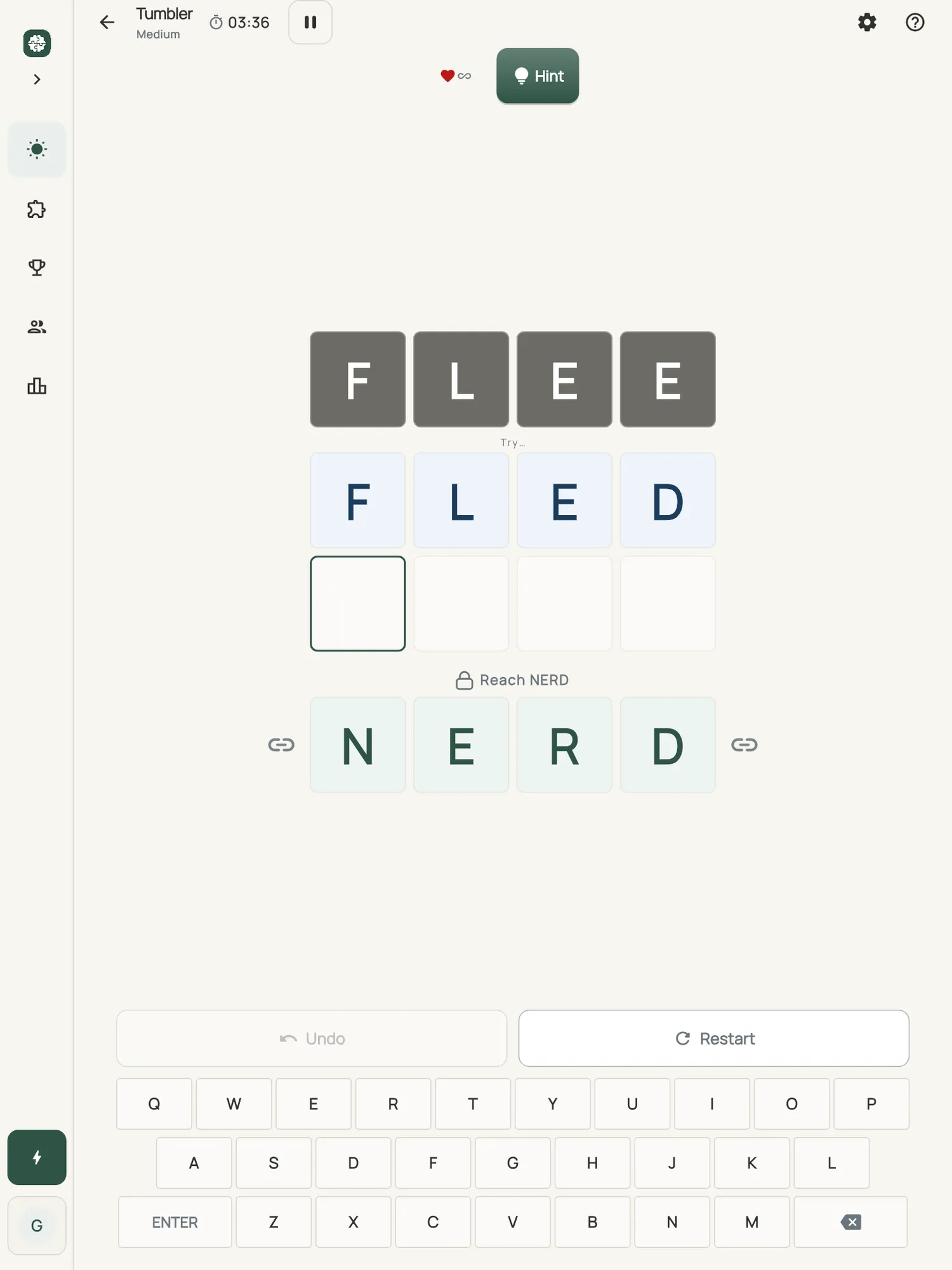
You get a start word and a target word. Type a word that changes exactly one letter of the word above it, press Enter, and it becomes the next rung of the ladder. Keep going until you type the target itself. COLD to WARM, for example, takes four steps: CORD, CARD, WARD, WARM.
Each puzzle has a par, the length of the shortest possible ladder. You can take as many extra steps as you like and still finish; a ladder closer to par scores higher.
Typing a word to find out whether it is one costs nothing. Your score counts two slips as mistakes: sending a word you were already told is not a word, and a rung that changes more than one letter. The newest rung can be taken back at any time with Undo, at no cost.
The Rules
- 1
Change One Letter
Each step swaps exactly one letter of the word before it.
- 2
Real Words Only
Every rung of the ladder must be a real word. Trying one to find out costs nothing.
- 3
Reach the Target
Type the goal word as your last rung. Shorter ladders score higher, and longer ones still win.
- 4
Two Slips Count as Mistakes
Your score counts two things as mistakes: sending a word you were already told is not a word, and a rung that changes more than one letter.
The real screens.
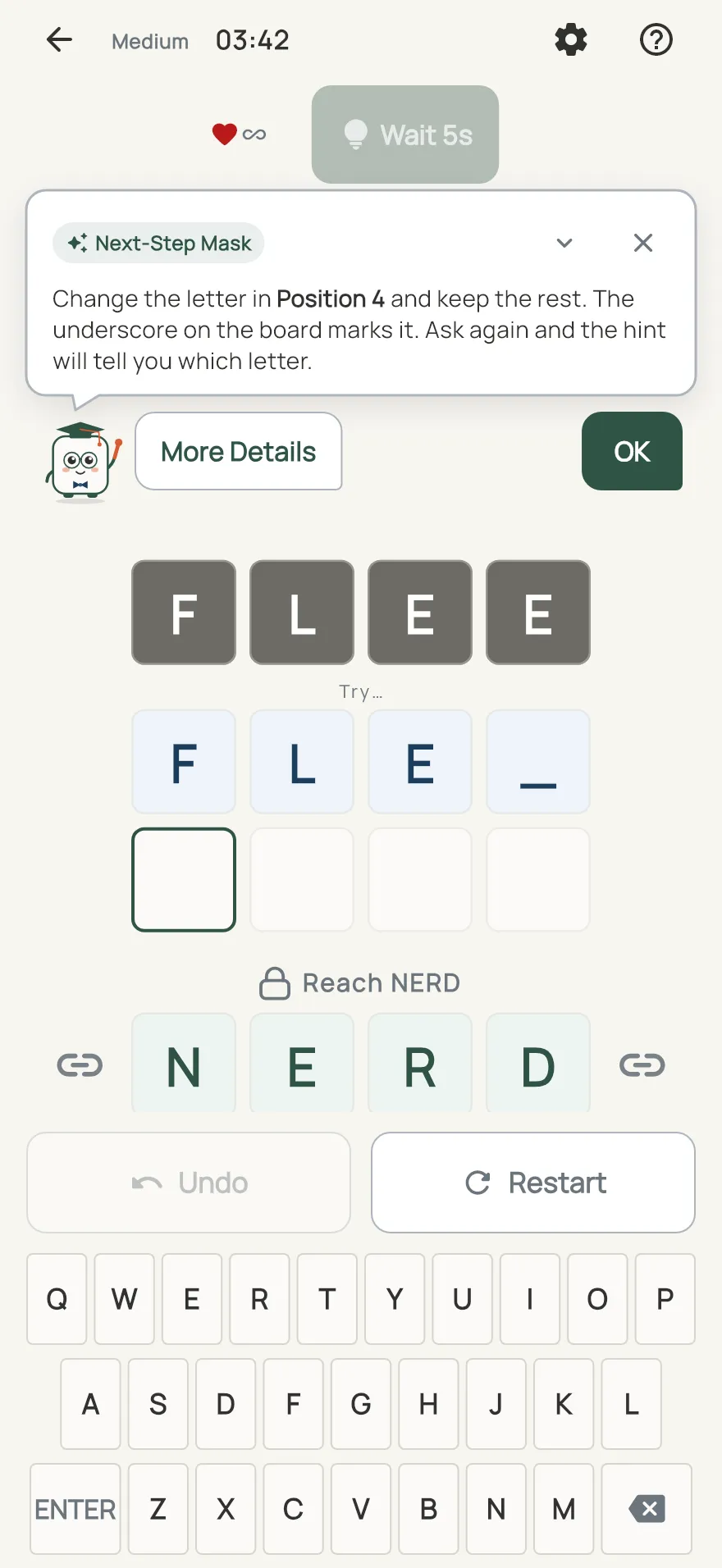
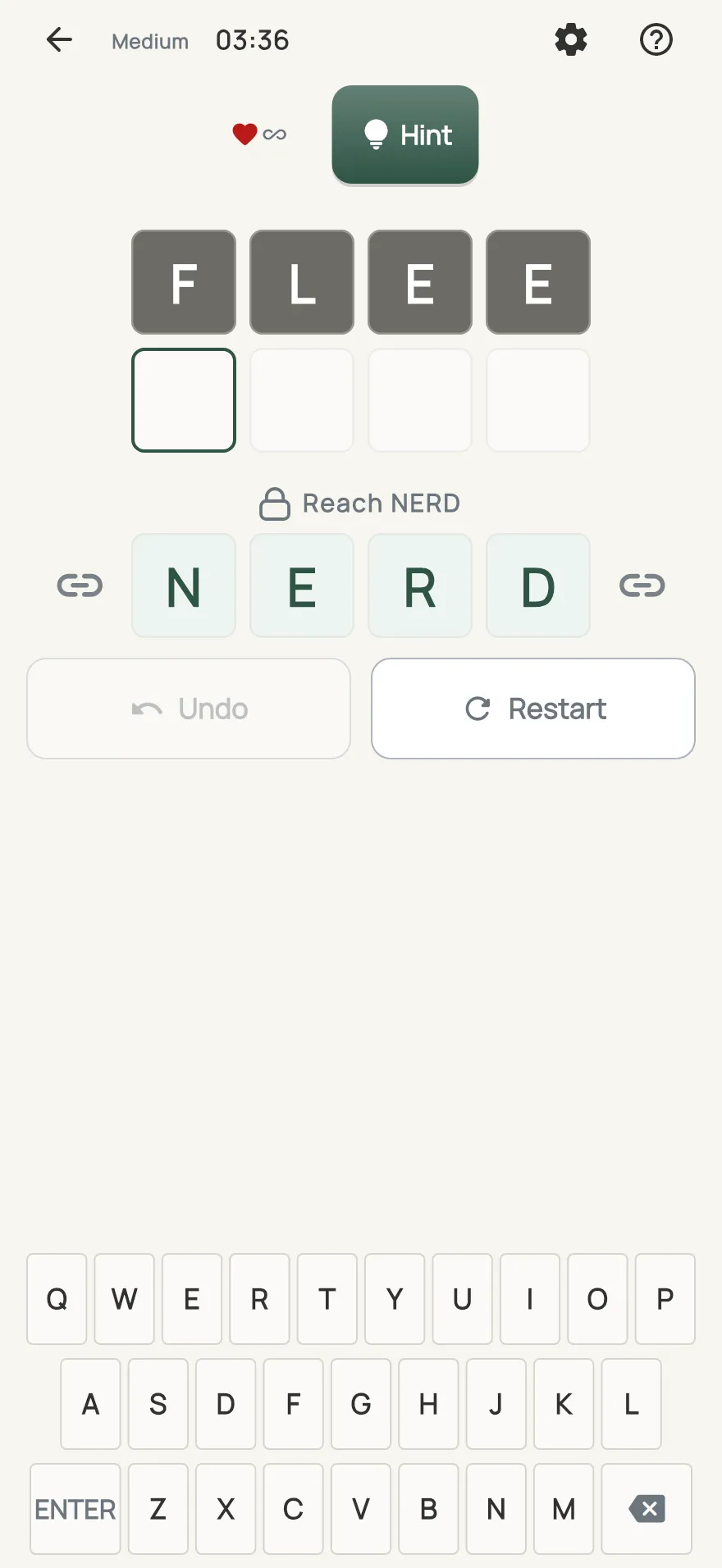
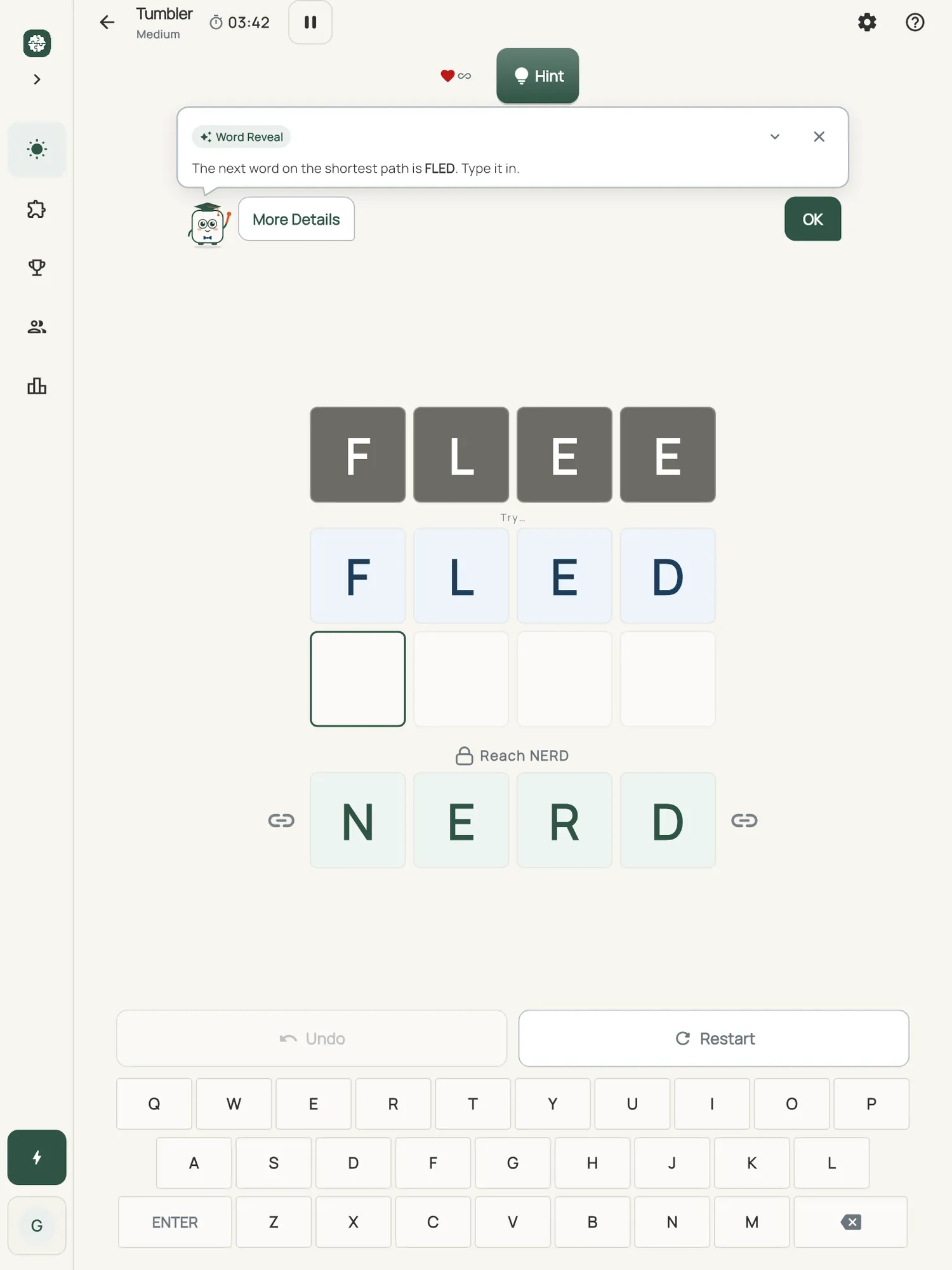
Every picture on this page is the app itself, on a board from the game.
Where Word Ladders Come From
Lewis Carroll invented the word ladder on Christmas Day 1877, for two girls, Julia and Ethel Arnold, who had nothing to do. He called it Word-Links at first. When he began publishing the puzzles in the magazine Vanity Fair, from the issue of 29 March 1879, he called them Doublets, and the first one asked readers to “Drive PIG into STY”.
Carroll liked the two words to belong together: PIG to STY, APE to MAN, FLOUR to BREAD. The same year, Macmillan collected the puzzles into a booklet, Doublets: A Word-Puzzle.
Tumbler keeps Carroll's rules and adds a par to every puzzle. Each puzzle is checked to have at least one shortest ladder made only of common words, so solving it never depends on knowing an obscure one.
How the Levels Differ
Easy uses 4-letter words with a par of 3, and the start and target already share one letter in the same place, so every step puts a letter right. Medium uses 4-letter words with a par of 4 and no shared letters; every step still puts one more letter right.
Hard uses 5-letter words with a par of 6: one step more than the 5 letters that have to change, so even the shortest ladder takes a step that does not put a letter right. Extra Hard uses 5-letter words with a par of 8, three steps more than the 5 letters. The start and target are familiar words on every band.
How a board gets harder.
Tumbler has one move — change a letter — so its hints show the next rung instead of naming a technique. From wherever you are, the first hint shows the next word on a shortest ladder with a blank at the letter that changes; the second shows the whole word. What makes a board harder is the length of the shortest ladder and how far it has to go around: on Easy and Medium every step of it puts a letter right, while Extra Hard's ladder takes 8 steps to change 5 letters.
More word games.
Words
Cipher
Deduce the hidden word
Words
Forage
Build words from a bag of letters
Words
Loom
A crossword with no clues — place each block's letters
Words
Word Search
Find the listed words hidden in a grid
Words
Beacon
Watch the words light up, tap them back in order
Words
Witness
Rule out the suspects the clues contradict
Today's five are waiting.
Download it free on the App Store or Google Play, or log in and play today's set right in your browser. Same puzzles, same streak, wherever you play.