
Word Search
Find the hidden words in the grid. The list is shown from the start. Words run across, down or diagonally, and on Hard and Extra Hard some run backwards.


- Four levels: Easy to Extra Hard
How Word Search Works

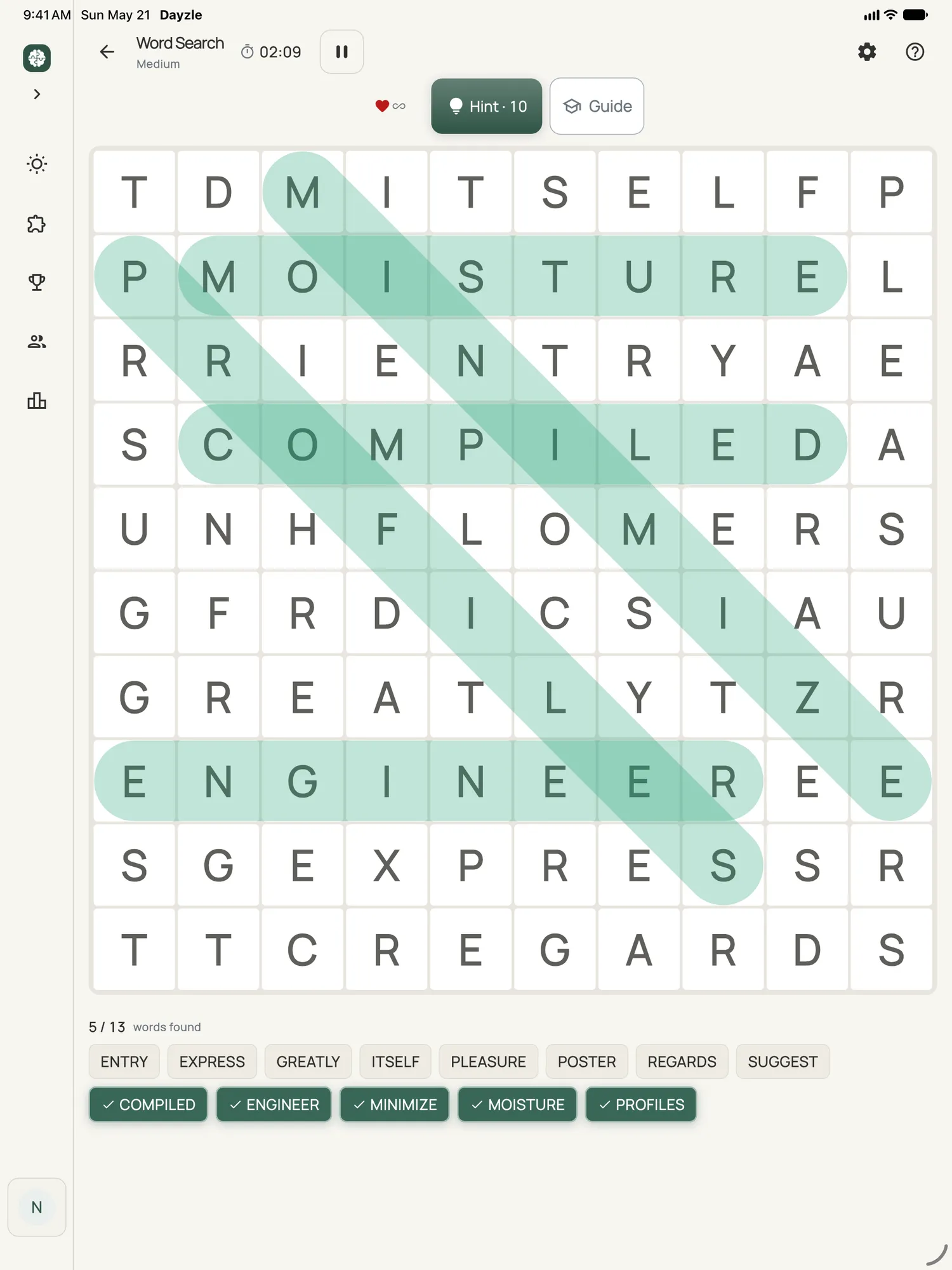
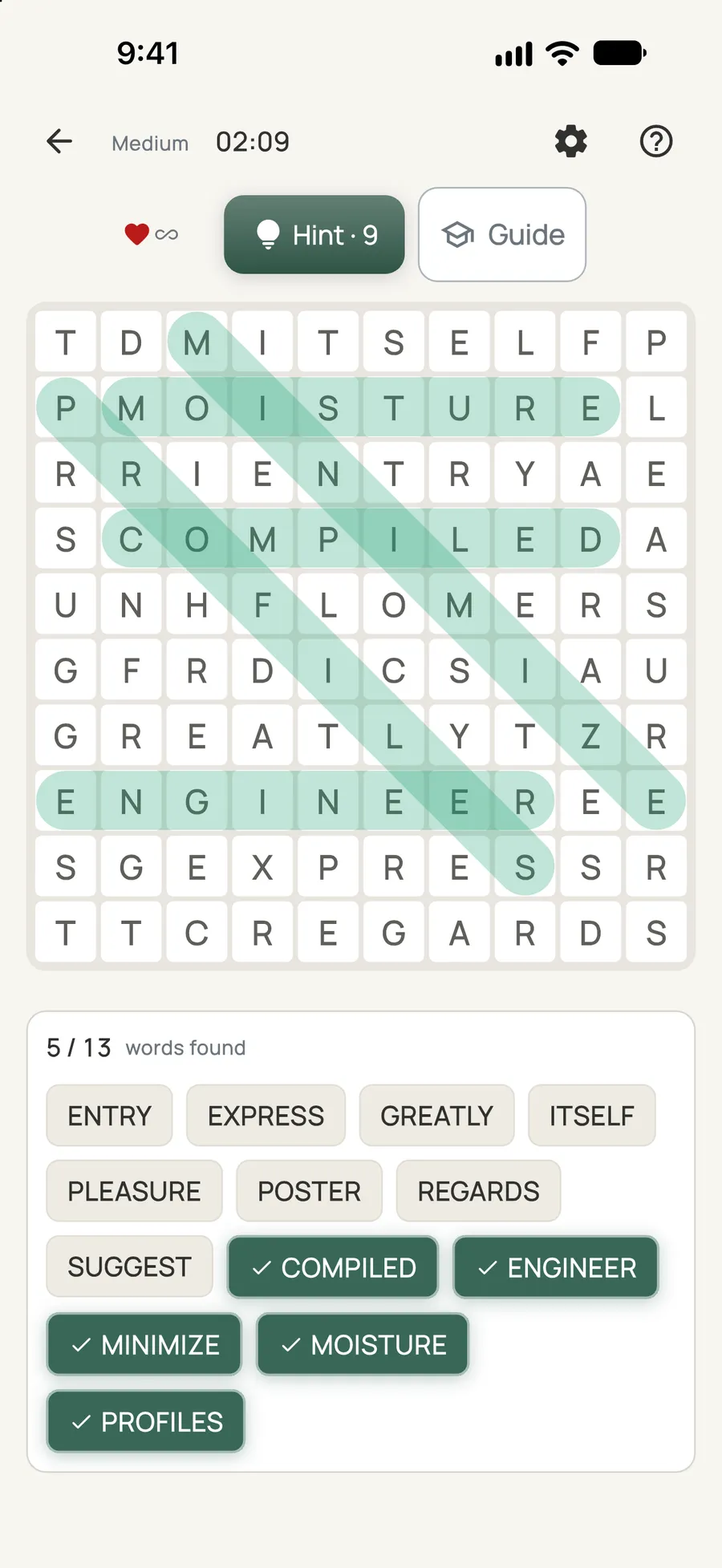
A square grid of letters hides a list of real words, each in a straight line. You mark a word by tapping its first and last letter, or by dragging from one end to the other, and it is struck off the list. The puzzle is done when every word on the list is marked.
The list is open from the start, so you always know what you are looking for. Each word appears in exactly one spot on the grid, and every word comes from the most common quarter of a list of about 18,000 everyday English words.
A mark that matches no word on the list fades away and counts as one mistake on your score, but it costs no heart. Marking a word you already found costs nothing.
The Rules
- 1
Mark a Word
Tap its first and last letter, or drag across it. Either end can come first.
- 2
Across, Down, Diagonal
Words run across, down or diagonally. On Hard and Extra Hard some also run backwards.
- 3
Find Them All
The puzzle is done when every hidden word is marked.
- 4
A Mark That Finds Nothing Counts as a Mistake
Your score counts a mistake each time you mark letters that are not a hidden word. It costs no heart. Marking a word you already found costs nothing.
- 5
How Hints Help
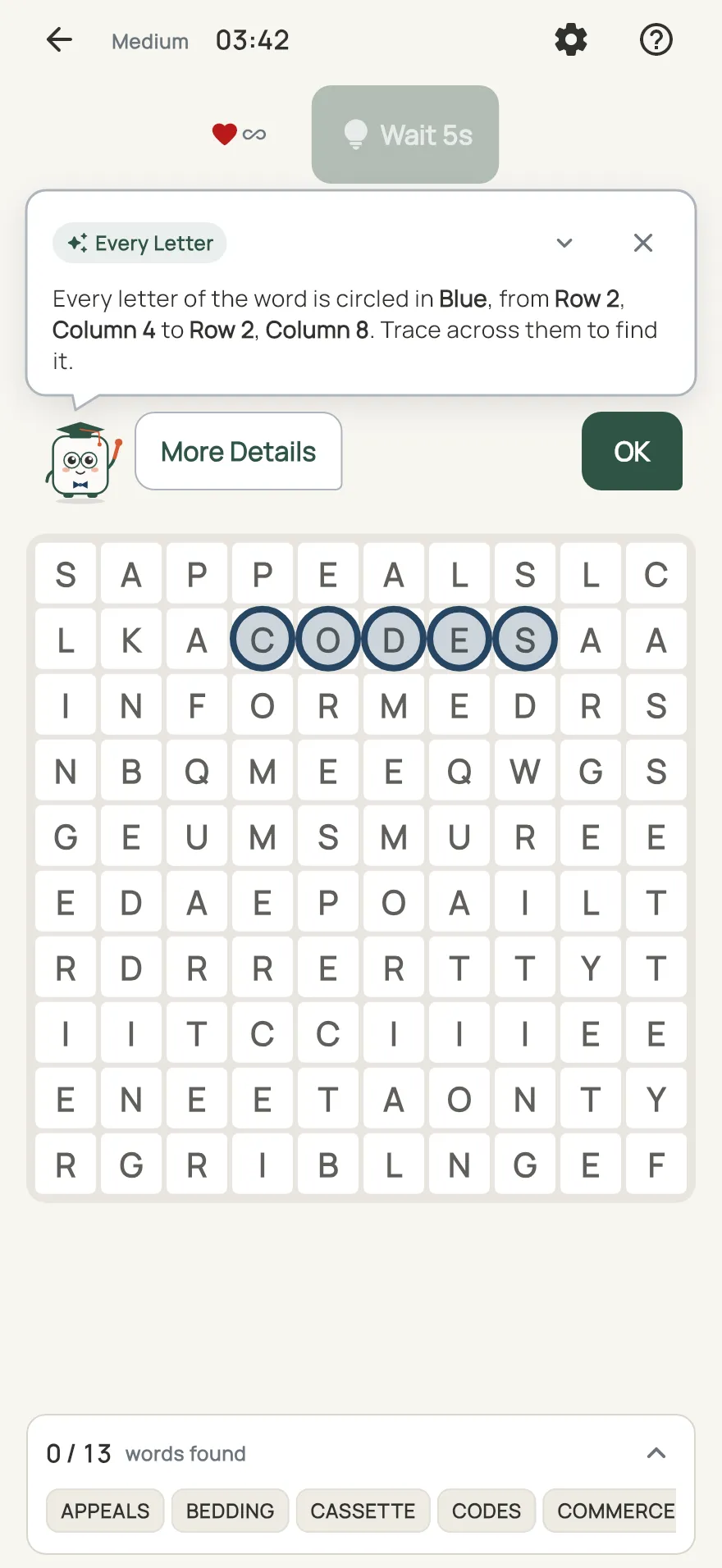
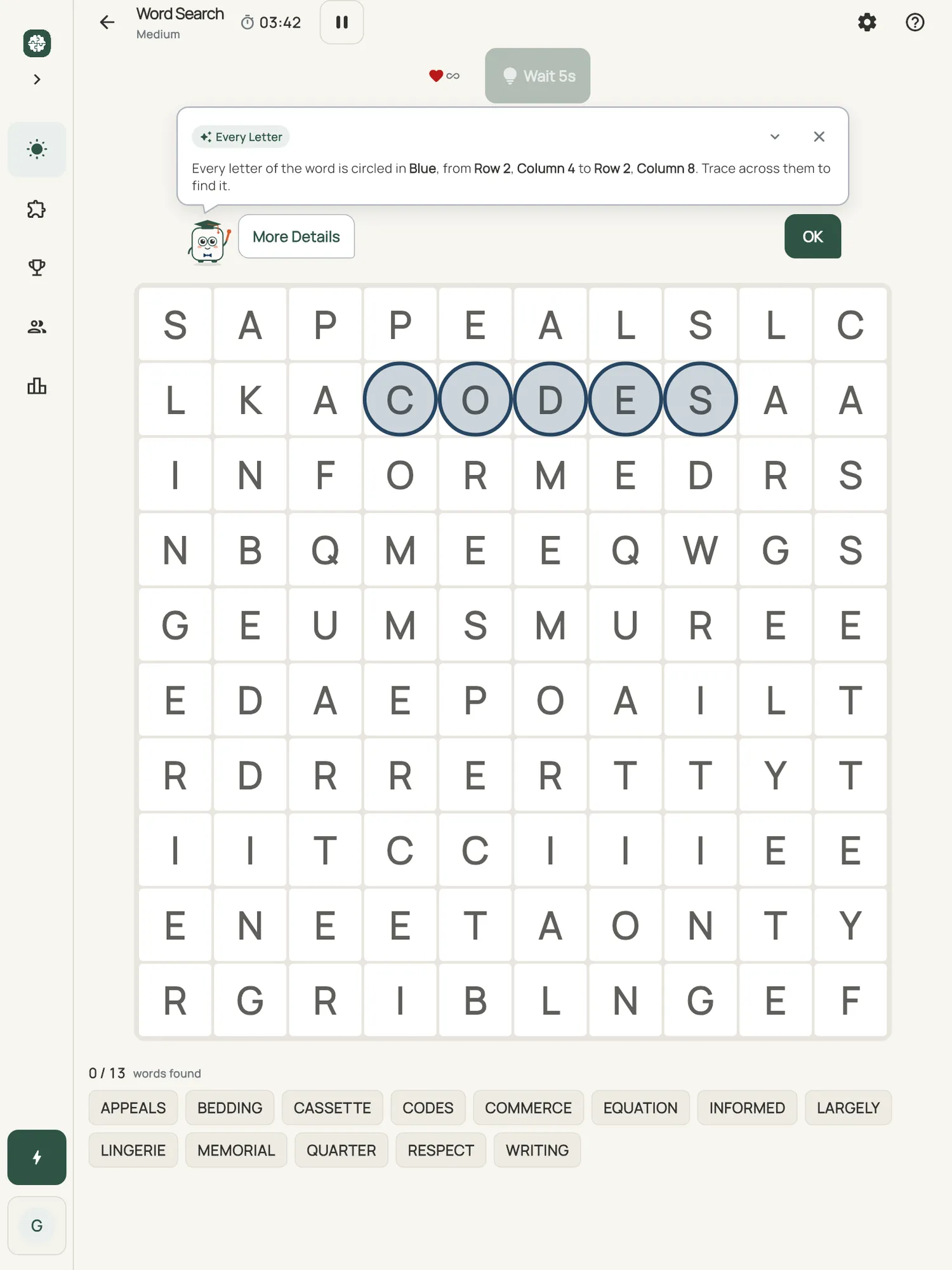
A hint works on the word with the fewest letters left to find, showing more of it each time you ask.
The real screens.
Every picture on this page is the app itself, on a board from the game.
Where Word Search Comes From
The first word search is usually credited to Norman E. Gibat, who printed one on 1 March 1968 in the Selenby Digest, a small free want-ad paper in Norman, Oklahoma. It hid the names of Oklahoma towns and cities. Local teachers asked him for copies to use with their students, one of them sent copies to teachers in other cities, and the puzzle spread from there.
The claim is not settled. The Spanish puzzle maker Pedro Ocón de Oro is reported to have been publishing letter-grid puzzles called sopas de letras, or letter soups, before 1968.
How the Levels Differ
Easy is a 6×6 grid with 5 words of 4 to 5 letters, all reading forwards: left to right, top to bottom, or diagonally down to the right. The other letters are random, so the real words stand out. Medium is a 10×10 grid with 13 words of 5 to 8 letters, still forwards only, but the other letters now follow how often each letter turns up in English, and the words cross each other: about 85% of a Medium board's squares belong to a listed word.
Hard is a 13×13 grid with 20 words of 5 to 8 letters in all 8 directions, so some words run backwards. Extra Hard is a 16×16 grid with 30 words of 6 to 8 letters in all 8 directions. Every band draws its words from the same list of common words.
How a board gets harder.
Finding a word takes one skill — spotting its letters in a line — so Word Search's hints show where a word is instead of naming a technique. The first hint lights the first letter of the word with the fewest letters left to find, the second lights both ends, and the third lights the whole word. A harder board asks for more of the same search, plus one new thing: the grid grows from 36 squares on Easy to 256 on Extra Hard, the list from 5 words to 30, and from Hard on, words can run backwards, which breaks left-to-right reading.
More word games.
Words
Amble
Words that wind through the grid and use every letter
Words
Amble Hive
Amble on a honeycomb
Words
Forage
Build words from a bag of letters
Words
Cipher
Deduce the hidden word
Words
Tumbler
Turn one word into another, a letter at a time
Words
Beacon
Watch the words light up, tap them back in order
Today's five are waiting.
Download it free on the App Store or Google Play, or log in and play today's set right in your browser. Same puzzles, same streak, wherever you play.